Social Microbiome
Why You Should Ask for Help in Postpartum
Since a specific viral infection brought the world to a standstill, we have become acutely aware of what can spread from person to person. Most of that awareness has centered on the negative—on what makes us ill. Yet, thanks to breakthroughs in microbiome research, we can now also look at the positive transfer and explain why social interaction is beneficial on a healthy microbiome.
I first learned about the importance of a healthy microbiome through the work of Dr. Zach Bush, who beautifully explains that everything in nature seeks balance. Our microbiome is a reflection of the earth’s search for balance: just as an ecosystem thrives when different species coexist, our bodies need a rich variety of bacteria, fungi, and viruses living in their own specific habitats. Think of a garden—not only do you need nutrient-rich soil, but also worms to aerate it, organic matter for nourishment, and pollinators to sustain growth. Diversity creates resilience.
The human microbiome—living on and inside our bodies—is essential for digestion, immune function, and overall health. The gut microbiome is the most studied, but these microbial communities also exist on the skin, in the eyes, brain, and vagina. An imbalanced microbiome has been linked to inflammatory diseases, digestive problems, auto-immune disorders, and even neurological issues. Our ancestors in the East understood this long ago: in Ayurveda, health begins with digestion and elimination. Simply put—good poop is good health.
Last week I attended a rough-cut screening of the Microbirth Plan film, organized by Geboortenis. The documentary offers a (not new but still courageous) perspective on vaginal birth: a baby receives crucial microbial ‘information’—the so-called seeding of the immune system—while passing through the birth canal. C-sections, antibiotics and sterile environments do not provide enough “good” microbes for a healthy start. With an emergency C-section, one can provide the right supplement with a (abundance of) skin-to-skin contact and breastmilk/ feeding. Although I fully support this view, I couldn’t shake the feeling that an essential piece of the puzzle was missing.
We readily acknowledge that biodiversity and a healthy lifestyle support optimal functioning. Yet, we often overlook one key factor: social interaction. What if our health isn’t an individual, isolated ‘monoculture’, but something that can only truly flourish in relationship with others? Especially in the transition into motherhood and parenthood, we need the village—not just emotionally, but biologically. From a microbial perspective, it may be profoundly healthy to allow others close to you during the postpartum period.
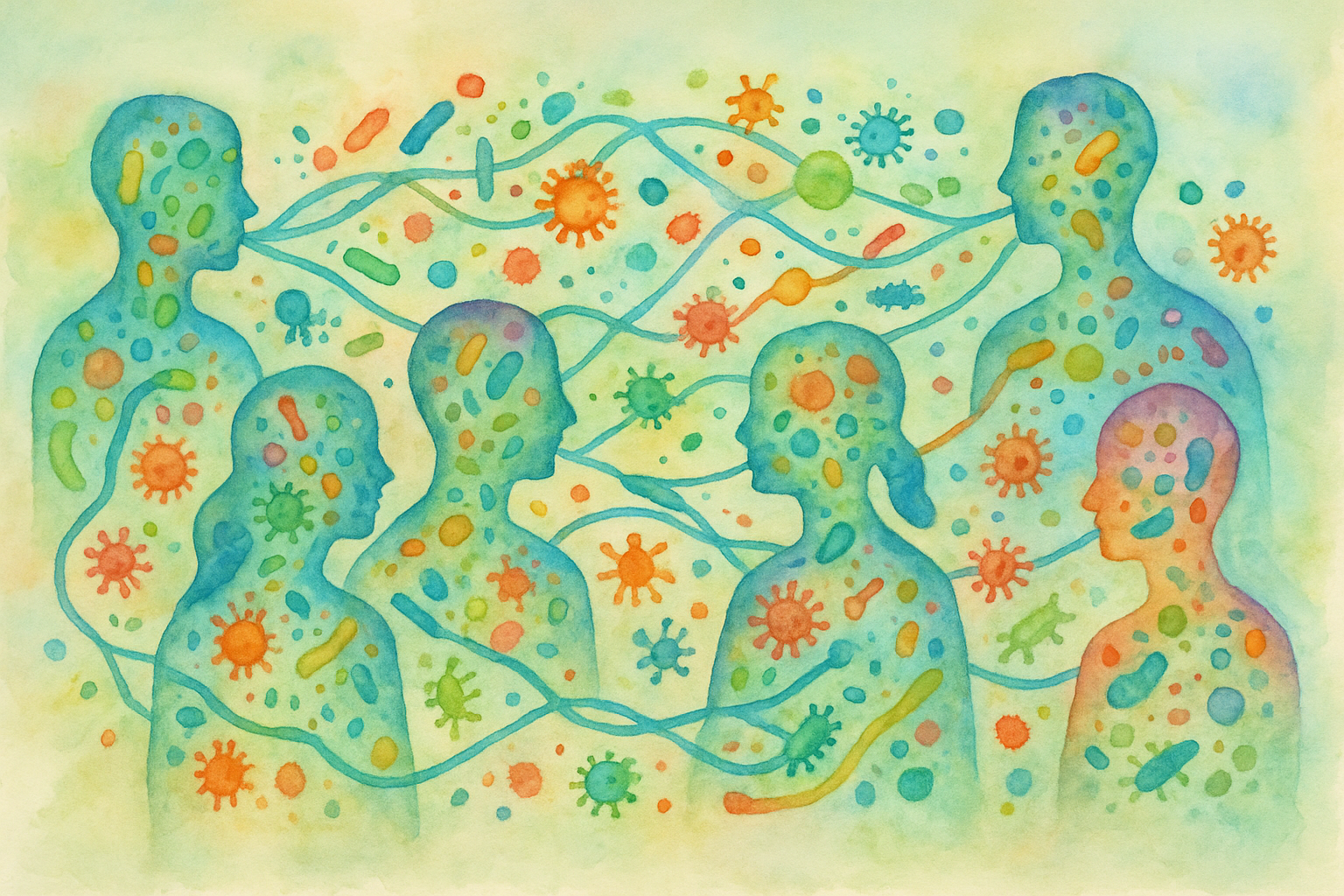
A quick search led me to the concept of the social microbiome:
“Social relationships strongly contribute to diversifying host microbiomes and to the transmission of beneficial microbes. In turn, more diverse and valuable microbiomes promote pathogen resistance and optimal health, translating into lifelong fitness benefits.” Perhaps microbiology will finally provide the ‘evidence’ for what we intuitively knew all along: Parents need a village to raise a healthy generation.